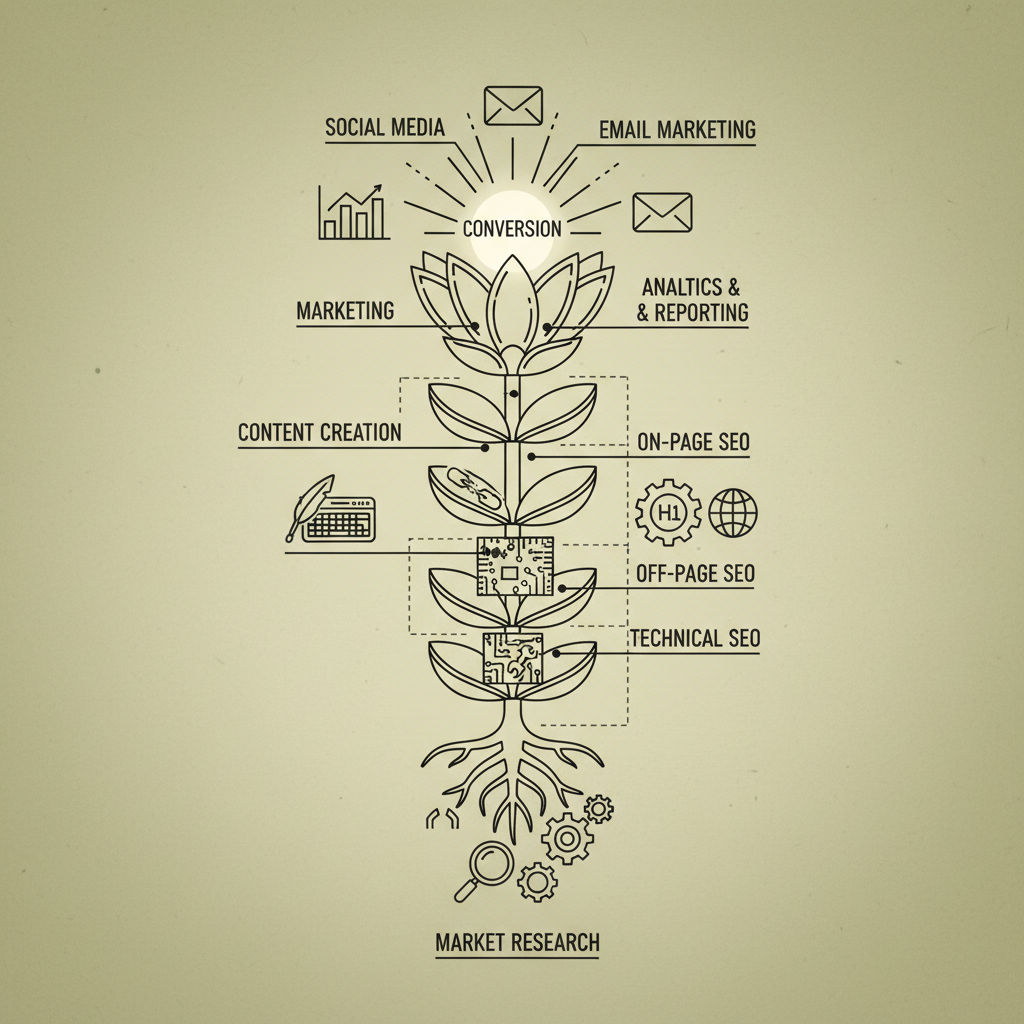

Many enterprises struggle to bridge the gap between a conceptual business idea and a scalable digital reality, often finding that internal teams lack the specific multidisciplinary agility required for rapid deployment. This disconnect frequently results in products that are technically functional but fail to meet actual user needs or market demands.
The shift toward leaner, data-driven development has transformed how companies approach software and platform creation. Rather than traditional long-cycle development, there is a growing reliance on external specialized partners who can integrate strategy, UX design, and agile engineering into a single streamlined workflow.
Selecting a digital product agency is no longer just about outsourcing code, but about finding a strategic partner capable of navigating the complexities of the modern digital economy.


Historically, digital development was treated as a linear process: specifications were written, a product was built in isolation, and it was launched with the hope of market fit. This "waterfall" approach often led to costly failures when the final product didn't align with shifting user behaviors.
Today, the role of a digital product agency has shifted toward iterative discovery. The focus is now on creating Minimum Viable Products (MVPs) that allow for real-world testing and rapid pivoting based on actual user data, reducing the financial risk of large-scale digital transformations.
A professional agency operates at the intersection of business strategy, user experience (UX), and technical engineering. The workflow begins with "Product Discovery," where the agency identifies the core problem the product solves, maps out user personas, and defines the value proposition to ensure the build is grounded in market reality.
Following discovery, the design phase focuses on rapid prototyping and usability testing. By creating high-fidelity wireframes and interactive prototypes, the agency can validate assumptions before a single line of code is written. This reduces technical debt and ensures that the final architecture is optimized for both performance and scalability.
The final stage is agile delivery, characterized by short "sprints" and continuous integration. This approach allows clients to see tangible progress every two weeks and make adjustments in real-time, ensuring the product evolves alongside the business goals and user feedback.
Building a great product is only half the battle; the other half is ensuring it reaches the right audience with precision. Many organizations fail because they separate product development from marketing, creating a "silo effect" where the product features do not align with the marketing promises.
The integration of lean marketing systems—such as the SSTD system employed by Beijing E&C EASYC GROUP—allows companies to align brand consulting, digital advertising, and technology development into a single, cohesive growth engine.
By applying this lean approach, a digital product agency can ensure that the product's growth is organic and sustainable. Instead of massive, inefficient ad spends, the focus shifts to smart communication and cross-border marketing strategies that target high-intent users in specific sectors, such as smart manufacturing.
Evaluating the performance of a digital product requires moving beyond "vanity metrics" like total downloads or page views. True success is measured by engagement depth, retention rates, and the conversion efficiency of the user journey. A sophisticated agency implements tracking frameworks that correlate technical performance with business outcomes.
The following index illustrates the relative priority of different evaluation factors when optimizing a digital product for market scale. While stability is the foundation, the ability to iterate based on user data provides the highest long-term value.
In a typical industrial setting, a manufacturer evaluating their digital presence might find that their current tools are fragmented. A digital product agency can intervene by consolidating these tools into a single, unified platform that manages everything from lead generation to customer support, specifically tailored for the smart manufacturing sector's complex sales cycles.
Another common scenario involves a company scaling into new international markets. Here, the agency's role expands into cross-border marketing and localization, ensuring that the digital product not only functions technically in a new region but also resonates culturally and operationally with local business customs and regulatory requirements.
The integration of AI into the development lifecycle is fundamentally changing the output of digital agencies. We are seeing a shift from static software to "intelligent products" that can predict user needs and automate complex workflows, particularly in B2B environments where efficiency is the primary driver of value.
Furthermore, there is a move toward "Product-as-a-Service" models. Agencies are no longer just delivering a project; they are managing the ongoing evolution of the product. This ensures that the software does not become obsolete and continues to adapt as the client's business grows and the competitive landscape shifts.
Finally, the emphasis on sustainability and ethical AI is becoming a key selection criterion. Companies are seeking partners who can build transparent, accessible, and resource-efficient digital products that align with global corporate social responsibility (CSR) standards.
Choosing the right partner requires a balance between technical capability and strategic alignment. A common mistake is prioritizing a portfolio of "pretty" designs over a track record of solved business problems. The focus should be on the agency's ability to articulate the "why" behind their design and development choices.
Decision-makers should evaluate potential partners based on their methodology for risk mitigation. An agency that promises a fixed price and fixed timeline for a complex digital product is often a red flag; a professional partner will instead propose a discovery-led approach with flexible milestones based on validated learning.
The following comparison table provides a qualitative framework for distinguishing between a standard development shop and a strategic digital product agency.
| Evaluation Factor | Standard Dev Shop | Strategic Agency | Business Impact |
|---|---|---|---|
| Primary Focus | Feature Completion | Outcome Optimization | Higher ROI |
| Requirement Handling | Follows Specs | Challenges Assumptions | Better Product-Market Fit |
| Development Cycle | Waterfall / Linear | Agile / Iterative | Reduced Waste |
| UX Approach | Visual Interface | User Psychology | Higher Retention |
| Marketing Link | None / External | Integrated Growth | Faster Scaling |
| Success Metric | On-time Delivery | Key Performance Indicators | Measurable Growth |
A web design firm typically focuses on the visual presentation and basic functionality of a website. In contrast, a digital product agency manages the entire lifecycle of a software product, including business strategy, user research, complex engineering, and continuous iterative growth. While a design firm delivers a "site," a product agency delivers a "solution" that solves a specific business problem and scales over time.
Most strategic agencies use a phased approach: starting with a paid Discovery phase to define the product roadmap and validate the concept, followed by an MVP build using agile sprints. Post-launch, the engagement typically shifts to a retainer-based model focused on optimization, maintenance, and feature expansion based on actual user data and performance metrics.
Focus on their process rather than their tools. Ask how they handle technical debt, how they manage version control, and how they approach quality assurance (QA). A professional agency will be able to explain their technical decisions in business terms, showing how their architecture supports future scalability and security without using excessive jargon.
Lean marketing prevents the common mistake of launching a product into a void. By integrating marketing early, agencies can use feedback from early adopters to refine product features. This ensures that when the product fully launches, it already has a validated value proposition and a target audience, significantly lowering the cost of customer acquisition.
Low-cost providers often operate as "feature factories," meaning they build exactly what you ask for without questioning if it's the right solution. This leads to products that are technically complete but commercially unsuccessful. The long-term cost of rebuilding a failed product is far higher than the initial investment in a strategic agency that ensures the product is viable.
AI has shifted the focus from manual user inputs to predictive experiences. Modern products now leverage AI to automate repetitive tasks and provide personalized content. Agencies now incorporate AI research into their development phase to determine where automation can provide the most value to the user, rather than simply adding AI as a superficial feature.
The complexity of the modern digital landscape requires a shift from simple outsourcing to strategic partnership. By focusing on iterative discovery, lean marketing, and data-driven optimization, companies can transform their digital presence from a cost center into a primary driver of business growth.
Whether specializing in smart manufacturing or global consumer services, the goal of a digital product agency is to ensure that technology serves the business objective, not the other way around. Investing in the right strategic framework today prevents the costly failures of tomorrow.