In the modern era of hyper-connectivity, content marketing in digital marketing has evolved from a supplementary tactic into the very backbone of brand visibility. By shifting the focus from aggressive selling to providing genuine value, businesses can cultivate a loyal audience that views the brand as a trusted authority rather than just another vendor. This strategic approach ensures that a company's message reaches the right people at the right time, creating a sustainable growth engine in a crowded marketplace.
The global landscape of commerce has shifted toward a "pull" rather than a "push" dynamic. Consumers are now equipped with an unprecedented ability to filter out traditional advertising, making the educational and entertaining nature of content essential for survival. Implementing a robust strategy for content marketing in digital marketing allows organizations to address specific customer pain points, building a bridge of trust that facilitates smoother conversion cycles and higher customer lifetime value.
Understanding the intricacies of this discipline involves more than just writing blog posts; it requires a deep integration of data analytics, psychological triggers, and multi-channel distribution. Whether you are a startup seeking market entry or an established enterprise aiming for digital transformation, mastering the art of value-driven storytelling is the key to unlocking scalable organic reach and establishing an enduring competitive advantage in the digital ecosystem.
Global Relevance of Content Strategies
On a global scale, the adoption of content marketing in digital marketing has mirrored the rise of the information economy. Data from leading digital agencies indicates that over 70% of B2B marketers rely on content to drive lead generation, reflecting a universal shift toward transparency and expertise. In an era where consumers are wary of "sales pitches," providing high-quality, informative content serves as a global currency of trust.
The challenge facing many international brands is the "noise" of the digital space. With billions of pieces of content uploaded daily, the struggle is no longer just about production, but about relevance and distribution. By aligning content with the specific cultural and professional needs of a target demographic, businesses can transcend geographical barriers and establish a consistent brand voice that resonates across different markets.
Defining the Core of Content Marketing
At its simplest level, content marketing in digital marketing is the strategic process of creating and distributing valuable, relevant, and consistent content to attract and retain a clearly defined audience. Unlike traditional advertising, which interrupts the user experience to deliver a message, content marketing enhances the user experience by solving a problem or fulfilling a need, eventually driving profitable customer action.
This methodology is deeply connected to modern humanitarian and professional needs for authenticity. In an age of misinformation, the demand for verified, expert-led content has skyrocketed. Whether it is a detailed whitepaper on sustainable engineering or a series of instructional videos on financial literacy, the goal is to move the brand from the role of a "seller" to the role of an "educator" or "advisor."
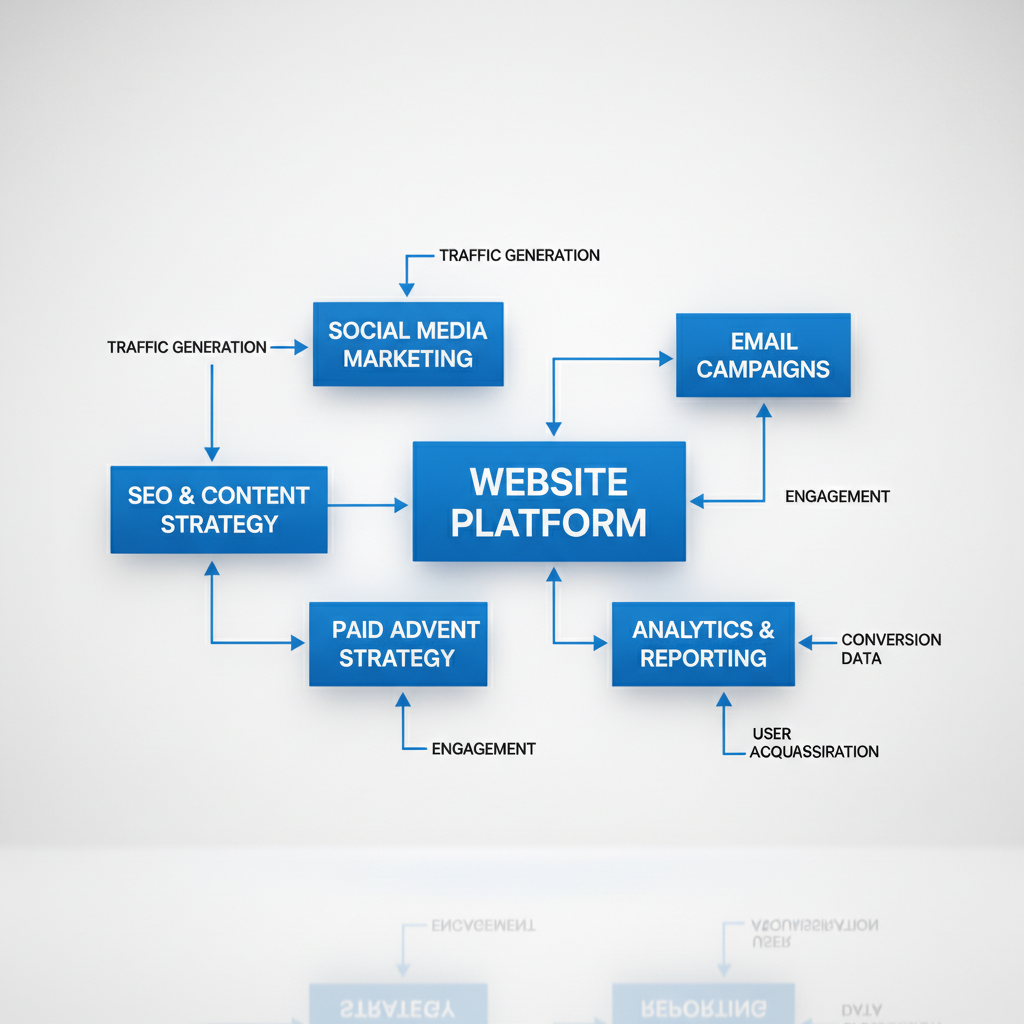
Ultimately, the "content" in content marketing is the vehicle, while the "marketing" is the strategic destination. By integrating SEO, user psychology, and data-driven insights, brands can ensure that their educational efforts are not just seen, but are acted upon, creating a seamless journey from first touchpoint to final conversion.
Essential Components for Scalability
To achieve true scalability, content marketing in digital marketing must be built upon a foundation of strategic pillars. The first of these is Strategic Alignment, ensuring that every piece of content serves a specific business goal, whether that is brand awareness, lead capture, or customer retention. Without this alignment, content production becomes an expensive hobby rather than a business asset.
Another critical component is Consistency and Frequency. The Google SEO algorithm rewards websites that provide fresh, updated, and comprehensive information. By maintaining a regular publishing cadence, brands can signal to both search engines and users that they are active leaders in their field, which significantly boosts the effectiveness of content marketing in digital marketing.
Finally, Distribution Multi-channeling ensures that content does not die on the page where it was published. By repurposing a single long-form article into social media snippets, email newsletters, and short-form videos, a brand can maximize its reach and ROI. This omni-channel approach ensures that the value proposition is reinforced across every platform the customer frequents.
Real-World Applications and Case Studies
In practice, content marketing in digital marketing manifests differently depending on the industry. For instance, in the SaaS (Software as a Service) sector, companies often use "Product-Led Content," where the software is naturally integrated into a tutorial that solves a user's problem. This approach reduces friction and demonstrates the product's value in real-time.
Similarly, in professional services like legal or financial consulting, "Authority Content" (such as deep-dive industry reports) is used to establish E-E-A-T (Experience, Expertise, Authoritativeness, and Trustworthiness). By publishing original research, these firms attract high-net-worth clients who are looking for proven expertise rather than the cheapest price point.
Effectiveness of Content Marketing in Digital Marketing Methods
Tangible Long-Term Business Value
The primary advantage of investing in content marketing in digital marketing is the creation of "compounding assets." Unlike paid ads, which stop generating leads the moment the budget runs out, a high-quality piece of evergreen content continues to attract organic traffic for years. This drastically lowers the Customer Acquisition Cost (CAC) over time.
Beyond the financial metrics, there is an emotional value tied to brand dignity and trust. When a company consistently provides help and education without demanding an immediate sale, it fosters a psychological bond with the consumer. This trust acts as a moat, protecting the brand from competitors who may offer lower prices but lack the perceived authority and reliability.
Future Trends in Digital Content
Looking ahead, the integration of AI and automation is redefining content marketing in digital marketing. We are moving toward "Hyper-Personalization," where AI can tailor the content experience in real-time based on the user's behavior and intent. This ensures that the user receives the exact piece of information they need at that specific stage of their buyer's journey.
Furthermore, the rise of "Zero-Click Content" is changing how we view distribution. With platforms like Google and LinkedIn providing answers directly on the search page, the goal is shifting from driving traffic to "building presence." Brands must now optimize for visibility and brand recall, ensuring their expertise is recognized even if the user never clicks through to the website.
Finally, sustainability and ethical marketing are becoming core components of content strategy. Modern audiences, particularly Gen Z and Millennials, gravitate toward brands that demonstrate social responsibility through their content. Transparent storytelling about green energy, fair labor, and corporate ethics is no longer optional—it is a requirement for long-term brand survival.
Overcoming Common Implementation Challenges
One of the most frequent hurdles in content marketing in digital marketing is the "Quality vs. Quantity" dilemma. Many firms fall into the trap of producing vast amounts of mediocre content to satisfy a calendar, which can actually harm their SEO and brand perception. The solution lies in the "10x Content" philosophy: creating pieces that are ten times better than anything else available on the topic.
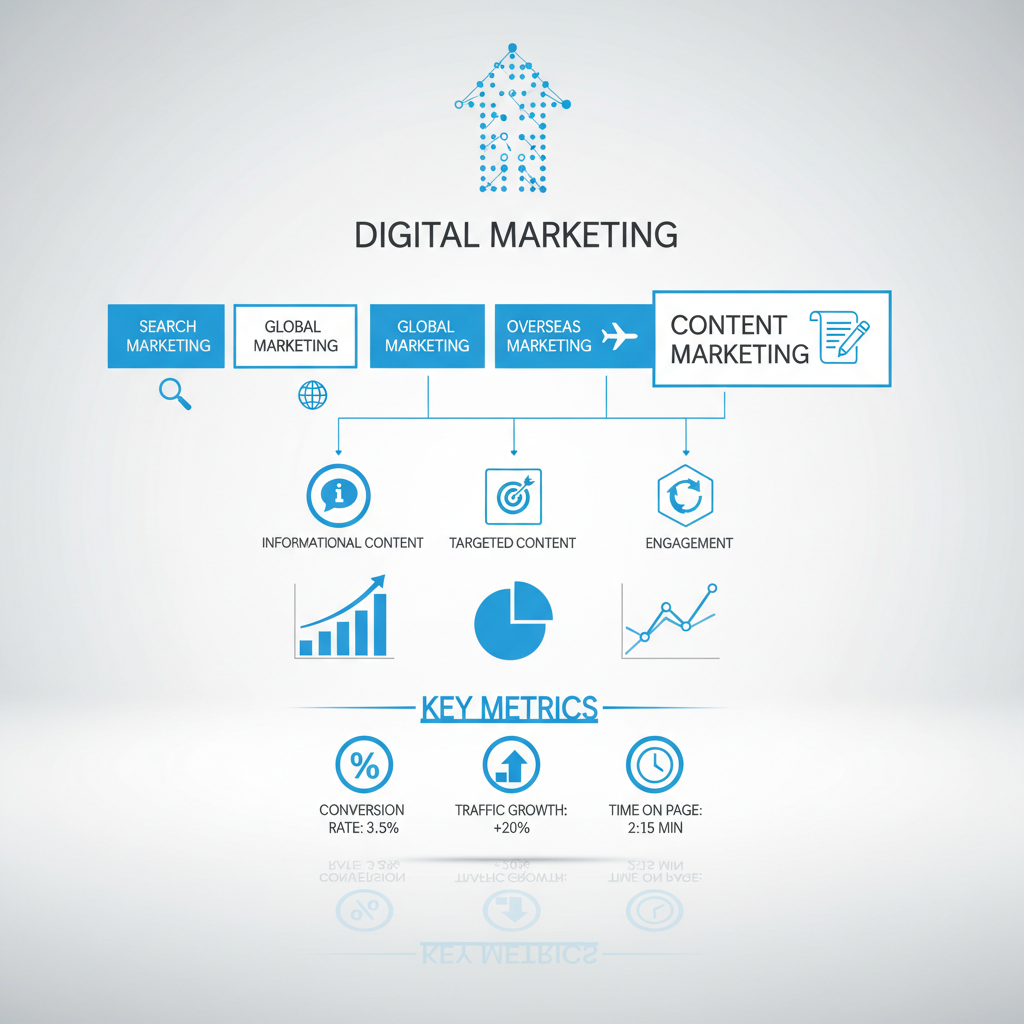
Another challenge is the difficulty of measuring direct ROI. Since content often serves as the top-of-funnel awareness tool, it may not lead to an immediate sale. Expert marketers overcome this by using "Micro-Conversions"—tracking newsletter sign-ups, time-on-page, and repeat visits—to gauge the health of the content pipeline before it hits the sales stage.
Lastly, the lack of technical resources can hinder distribution. Many companies have great writers but lack the technical SEO knowledge to make that content discoverable. Adopting a "Modular Content" strategy, where content is designed as a set of reusable blocks, allows for easier optimization across different platforms and faster updates as industry standards evolve.
Comparative Analysis of Content Marketing Strategic Frameworks
| Framework Type |
Primary Goal |
Resource Intensity |
Expected Time to ROI |
| Educational Hub |
Authority Building |
High |
6-12 Months |
| Viral Social Strategy |
Rapid Awareness |
Medium |
1-3 Months |
| SEO-Driven Blogging |
Organic Traffic |
Medium |
3-6 Months |
| Case Study Portfolio |
Conversion Trust |
Low |
Immediate |
| Interactive Content |
User Engagement |
Very High |
2-5 Months |
| Newsletter Ecosystem |
Customer Loyalty |
Medium |
Continuous |
FAQS
Unlike paid advertising, content marketing is a long-term investment. While some viral content can provide immediate spikes, organic SEO-driven growth typically takes 3 to 6 months to gain momentum. However, the resulting traffic is sustainable and significantly cheaper over time than paid leads.
Yes. Small businesses can win by focusing on "niche authority." While corporations produce broad content, small businesses can create highly specialized, deeply technical, or locally relevant content that larger entities overlook, thus dominating specific long-tail search queries.
For B2B, a combination of whitepapers, detailed case studies, and educational webinars tends to be most effective. These formats demonstrate professional competence and solve complex business problems, which are the primary drivers for B2B decision-makers.
ROI should be measured through a mix of leading and lagging indicators. Lagging indicators include direct sales and lead conversions. Leading indicators include organic traffic growth, average time on page, and email subscription rates, which signal future conversion potential.
Quality always wins in the modern SEO landscape. One comprehensive, well-researched "pillar post" that solves a user's problem completely is more valuable than ten short, superficial posts. Focus on providing the most complete answer on the web for your target keywords.
AI is a tool for efficiency, not a replacement for expertise. AI can help with outlining, research, and distribution, but "Human-in-the-loop" content—adding personal experience and unique insights—is what will distinguish winning brands from generic, AI-generated noise.
Conclusion
In summary, content marketing in digital marketing is not merely a set of tactics, but a comprehensive business philosophy centered on value exchange. By prioritizing the needs of the audience over the immediate desires of the sales team, brands can build an engine of sustainable growth, lower their acquisition costs, and establish an unshakeable market authority.
As we move toward an AI-driven future, the premium on authentic, expert-led storytelling will only increase. Businesses that invest in high-quality, ethical, and strategically aligned content today will be the ones that survive the volatility of algorithm changes and shifting consumer behaviors. To begin your journey toward digital authority, visit our website: www.ecglobaladvisor.com