

The Power of mobile marketing in digital marketing for Business
The Power of Mobile Marketing in Digital Marketing for Modern Business
In an era where the smartphone is practically an extension of the human hand, understanding the role of mobile marketing in digital marketing is no longer optional—it is critical for survival. As global internet traffic continues to shift toward handheld devices, businesses must pivot their strategies to meet customers where they spend most of their time. From personalized push notifications to location-based services, the ability to engage users in real-time provides an unprecedented competitive advantage. This guide explores how integrating mobile-first strategies can accelerate growth, enhance user experience, and drive higher conversion rates for international brands.
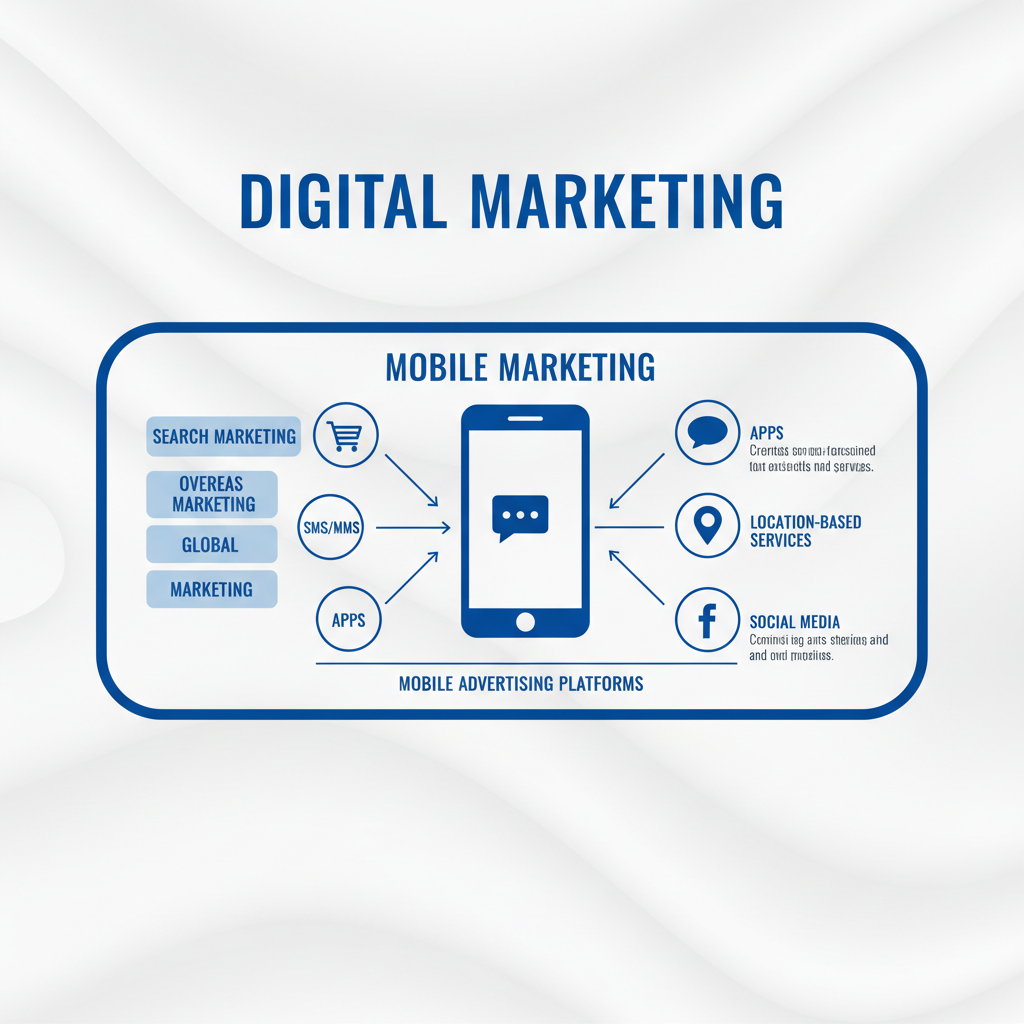
Core Components of Mobile-First Strategies
To effectively implement mobile marketing in digital marketing, brands must look beyond simple website responsiveness. A true mobile-first approach involves optimizing every touchpoint for the smaller screen and shorter attention spans of mobile users. This includes App-based marketing, SMS campaigns, and QR code integration. By streamlining the user journey—reducing the number of clicks to reach a checkout page or a contact form—companies can significantly lower bounce rates. The goal is to create a seamless transition between the discovery phase on social media and the final conversion on a mobile browser.
Pro Tip: Focus on "Thumb-Friendly" design. Ensure all critical call-to-action (CTA) buttons are placed within the natural reach of a user's thumb to maximize engagement rates.
Comparing Traditional Digital Marketing vs. Mobile Marketing
While traditional digital marketing focuses heavily on desktop experiences and broad email outreach, the specific nuances of mobile marketing in digital marketing allow for much higher levels of personalization. Mobile devices provide access to GPS data and biometric authentication, which desktop computers cannot offer. This allows marketers to send "hyper-local" offers when a customer is physically near a store, creating a bridge between the digital and physical worlds that was previously impossible.
Optimizing SEO for Mobile Search
Google's shift to mobile-first indexing means that the mobile version of your website is now the primary version used for ranking. To master mobile marketing in digital marketing, you must prioritize Page Speed and Core Web Vitals. Users will abandon a site that takes more than three seconds to load. Implementing lightweight images, utilizing browser caching, and minimizing JavaScript are essential steps. Furthermore, voice search optimization is becoming vital, as more users utilize Siri or Google Assistant to find local services, requiring a shift toward more natural, conversational long-tail keywords.
The Impact of Social Commerce on Mobile Marketing
Social media platforms are the primary drivers of mobile marketing in digital marketing. The rise of "Social Commerce"—where users can buy products directly within Instagram or TikTok—has shortened the sales funnel. By removing the friction of leaving the app to visit an external website, brands see a dramatic increase in impulse purchases. For cross-border trade, this means utilizing shoppable ads and influencer partnerships that lead directly to a mobile-optimized checkout, ensuring the customer never loses momentum during the purchase process.
Key Performance Indicators (KPIs) for Mobile Campaigns
Measuring the success of your mobile marketing in digital marketing efforts requires a different set of metrics than desktop campaigns. While "clicks" are important, "app installs," "active user rate," and "cost per acquisition (CPA) via mobile" provide deeper insights. It is also crucial to monitor the Conversion Rate by Device to identify if mobile users are dropping off at a specific stage of the checkout process, which usually indicates a technical friction point or a lack of mobile-payment options like Apple Pay or Google Pay.
Conclusion: Embracing the Mobile Revolution
The integration of mobile marketing in digital marketing is not a trend, but a fundamental shift in consumer behavior. By focusing on speed, personalization, and a seamless user interface, businesses can unlock new growth opportunities and build stronger relationships with their audience. Whether through an intuitive mobile app or a high-performance responsive website, the key is to prioritize the mobile user's convenience above all else. Start optimizing your mobile presence today to ensure your brand remains relevant in an increasingly connected world.
Frequently Asked Questions (FAQs)
Why is mobile marketing more effective than general digital marketing?
Mobile marketing is often more effective because it leverages the "always-on" nature of smartphones. Unlike a desktop, a mobile phone is with the user at all times, allowing for real-time engagement through push notifications and location-based triggers. This immediacy enables brands to reach customers at the exact moment they are most likely to make a purchase decision, leading to higher conversion rates and more personalized customer journeys.
What is the difference between a responsive website and a mobile-first design?
A responsive website is designed for desktop first and then "shrunk" to fit mobile screens. In contrast, a mobile-first design starts with the smallest screen and adds complexity as the screen size increases. Mobile-first design is superior because it forces the creator to prioritize the most essential content and functions, removing clutter and ensuring the fastest possible load times for the majority of users who access the web via phones.
How does mobile marketing impact SEO rankings?
Since Google uses mobile-first indexing, the mobile version of your site is the primary source of information for ranking. If your site is slow on mobile, has intrusive interstitials (pop-ups), or is difficult to navigate on a small screen, your search rankings will drop even if your desktop site is perfect. Proper mobile marketing in digital marketing ensures your site meets all technical SEO requirements for mobile, directly boosting your visibility in search engine result pages (SERPs).
Which mobile marketing channels offer the highest ROI?
While ROI varies by industry, SMS marketing and Push Notifications typically offer some of the highest return on investment due to their incredibly high open rates (often over 90%). Additionally, Social Commerce (buying within social apps) is currently seeing a surge in ROI because it eliminates the friction of redirection. For B2B companies, mobile-optimized landing pages paired with targeted LinkedIn ads generally yield the best results in terms of lead quality.


















-
 Jun. 30, 2025
 -
 May. 14, 2025
 -
 May. 13, 2025
 -
 Jun. 30, 2025
 -
 Jun. 30, 2025
 -
 Jul. 07, 2025